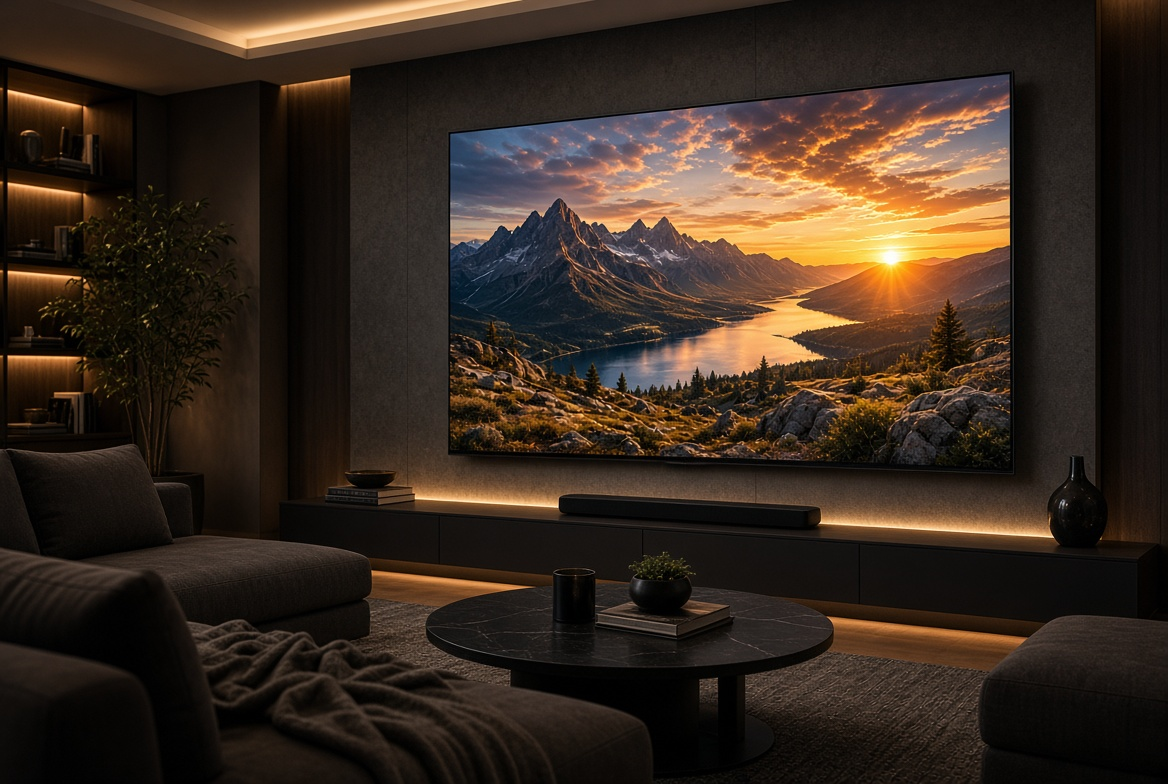
What Are UHD Movies? Your Complete 4K Viewing Guide
Watching a movie in low quality can ruin even a great story. Blurry details, weak colors, and dark scenes make the experience less enjoyable. UHD movies solve much of this problem by offering higher resolution and, in many cases, better color and contrast.
UHD means Ultra High Definition. In home entertainment, it usually refers to 4K video with a resolution of 3840 × 2160 pixels. That gives viewers about four times as many pixels as Full HD, creating sharper images and clearer fine details.
Table of Contents
UHD Movies: Complete Details at a Glance
| Feature | UHD Movies | Full HD Movies | Why It Matters |
| Common resolution | 3840 × 2160 | 1920 × 1080 | UHD shows more image detail |
| Common name | 4K Ultra HD | 1080p HD | Easier format identification |
| Picture detail | Very high | High | Better for large screens |
| HDR support | Often available | Sometimes available | Improves brightness and contrast |
| Color quality | Can be wider and richer | Depends on format | More natural-looking scenes |
| Streaming | Available on selected services | Widely available | UHD needs compatible plans and devices |
| Physical media | 4K Ultra HD Blu-ray | Blu-ray/DVD | Can offer high-quality local playback |
| Internet needs | Higher | Lower | UHD uses more data |
| Best screen size | Medium to very large | Small to medium | More pixels are useful on larger displays |
| Audio options | Often advanced | Depends on release | Can support immersive sound |
| Device needs | 4K display and compatible equipment | Less demanding | Every part of the setup must support UHD |
What Does UHD Mean in Movies?
UHD stands for Ultra High Definition. The term describes a higher-resolution video format designed to provide more detail than standard HD.
Most home UHD content uses a resolution of 3840 × 2160 pixels. This is commonly called 4K because the horizontal resolution is close to 4,000 pixels.
The term “4K” can also describe professional cinema formats with different specifications. For home viewing, however, 4K UHD usually means 3840 × 2160.
Why Do UHD Movies Look Better?
The biggest advantage of uhd movies is increased image detail. A 4K display contains four times the pixel count of a 1080p Full HD display.
This difference becomes easier to notice on larger screens. Fine textures, faces, landscapes, buildings, and small objects can appear sharper when the original content and display both support 4K.
However, resolution is not everything. Color, contrast, brightness, compression, source quality, and HDR support can also change how a movie looks.
UHD vs HD: What Is the Difference?
HD and UHD are not the same format.
Full HD commonly uses 1920 × 1080 pixels. UHD commonly uses 3840 × 2160 pixels.
That means UHD can show considerably more pixels in the same frame. On a large 4K television, this can produce a cleaner and more detailed image.
Still, a good Full HD movie can look better than a poorly compressed UHD file. The quality of the source remains important.
Simple comparison
- HD: 1920 × 1080 pixels
- UHD: 3840 × 2160 pixels
- UHD pixel count: About four times Full HD
- Best benefit: Greater detail on compatible displays
- Important factor: Source quality matters
Are UHD Movies the Same as 4K Movies?
In everyday home entertainment, UHD movies and 4K movies are often used to describe the same type of content.
There is a technical difference between consumer 4K UHD and some professional cinema 4K formats. Consumer televisions normally use 3840 × 2160 pixels, while digital cinema systems can use a wider 4096 × 2160 format.
For most viewers, the important point is simple: a 4K UHD movie is designed to provide much greater image detail than Full HD.
What Is HDR in UHD Movies?
HDR means High Dynamic Range. It works with resolution to improve the visual range of a movie.
While UHD increases the number of pixels, HDR can improve brightness, contrast, and color reproduction. This can make bright skies, lights, shadows, and colorful scenes appear more natural.
Popular HDR technologies include:
- HDR10
- HDR10+
- Dolby Vision
- HLG
Not every UHD title supports every HDR format. Your TV, streaming device, movie, and playback service must support the format you want to use.
UHD Movies vs 4K HDR Movies
A movie can be available in 4K without offering every HDR format.
For example, a title may have a 4K label but not Dolby Vision. Another title may offer both 4K and HDR.
This creates an important difference:
4K/UHD = resolution
HDR = expanded brightness, contrast, and color capability
When both work together, the picture can look significantly more impressive.
Where Can You Watch UHD Movies?
You can find UHD content through several legal entertainment options.
Streaming services
Major streaming platforms offer selected movies in 4K Ultra HD. Availability depends on the title, subscription, device, location, and technical requirements.
Netflix, for example, uses 4K and 4K HDR labels to identify supported content. The service also explains that compatible plans, devices, connections, and settings are required.
4K Ultra HD Blu-ray
Physical 4K Ultra HD Blu-ray discs provide another option. They can deliver high-quality movie playback without depending on streaming bandwidth.
This makes physical media attractive to viewers who want consistent local playback.
Digital movie stores
Some digital movie services sell or rent titles in 4K UHD. Availability and supported HDR formats can vary by movie and device.
Always check the movie’s format before buying or renting it.
What Devices Do You Need for UHD Movies?
You do not need a complicated home theater to watch uhd movies.
A basic setup may include:
- A 4K UHD television or monitor.
- A streaming device or smart TV app that supports 4K.
- A compatible streaming plan when required.
- A suitable HDMI connection for your equipment.
- A stable internet connection for streaming.
- A UHD movie that supports the desired quality.
Every part of the chain matters. If one device cannot handle the required format, playback may fall back to a lower quality.
How Fast Should Your Internet Be?
Internet speed matters when streaming uhd movies.
Netflix currently recommends a steady connection of at least 15 Mbps for Ultra HD streaming. Other services may have different requirements.
A faster connection can also help when several people use the same network. If your connection is unstable, the service may reduce video quality to prevent constant buffering.
For the best results:
- Use a stable Wi-Fi connection.
- Consider Ethernet for fixed home theater equipment.
- Keep your streaming device updated.
- Check your streaming plan.
- Test your internet speed.
- Avoid heavy downloads during movie playback.
Are UHD Movies Worth Watching on a Large TV?
Yes, a large screen can make the benefits of UHD easier to notice.
On a small screen viewed from far away, the difference between HD and UHD may be difficult to see. On a larger 4K television, additional image detail can become more noticeable.
Viewing distance also matters. Sitting at a reasonable distance from a large screen helps you appreciate the extra detail without making the pixels or image structure distracting.
Do All UHD Movies Have Better Picture Quality?
Not necessarily.
A UHD label tells you about resolution, but it does not automatically guarantee perfect picture quality. The original camera source, digital restoration, mastering, compression, color grading, and transfer can all affect the final result.
For older films, a carefully restored 4K release can look outstanding. A low-quality source that has simply been enlarged to 4K may offer less improvement.
This is why viewers should look beyond the resolution label.
Native 4K vs Upscaled Content
Native 4K content is created or mastered with a 4K workflow or source.
Upscaling takes lower-resolution content and processes it to fit a 4K display. Modern televisions can use advanced processing to make HD content appear sharper.
Upscaling can look good, but it does not create the same amount of original detail as genuine high-resolution content.
When shopping for uhd movies, check whether the release is actually mastered in 4K or simply presented at a 4K output resolution.
What Makes a Great UHD Movie Experience?
Resolution is only one part of the experience.
A strong UHD setup combines:
- High-quality source material
- 4K display resolution
- Good HDR performance
- Accurate color
- Strong contrast
- Stable streaming or high-quality physical media
- Compatible HDMI equipment
- Good sound
- Correct picture settings
A movie with excellent cinematography can show these advantages especially well.
Nature documentaries, science fiction, animation, action films, and visually rich dramas can benefit from high detail and strong color reproduction.
UHD Movies and Dolby Vision
Dolby Vision is an HDR technology developed by Dolby. It can provide greater brightness control, contrast, and color detail when supported by the movie and playback equipment.
Not every 4K movie uses Dolby Vision. Look for the Dolby Vision badge on supported services and compatible devices.
Dolby also works with Dolby Atmos, which focuses on immersive audio. Together, compatible UHD content, Dolby Vision, and Dolby Atmos can create a powerful home cinema experience.
How to Choose the Best UHD Movies
Choosing a good release requires more than searching for “4K.”
Check these details before watching or buying:
1. Check resolution
Look for 4K or Ultra HD labeling.
2. Check HDR
See whether the movie supports HDR10, HDR10+, or Dolby Vision.
3. Check the source
For older movies, find out whether the release received a genuine restoration or new 4K master.
4. Check audio
If sound matters to you, look for formats such as Dolby Atmos or other supported surround options.
5. Check device compatibility
Make sure your TV, streaming box, cables, and receiver support the required format.
6. Use legal sources
Official streaming platforms and authorized movie stores provide safer and more reliable playback.
Common Mistakes When Watching UHD Movies
Even an expensive 4K TV can produce disappointing results when the setup is incorrect.
Avoid these common mistakes:
- Watching a low-quality source and expecting true 4K detail.
- Using an internet connection that cannot maintain the required stream.
- Ignoring HDR compatibility.
- Using unsupported cables or ports.
- Leaving the TV on an unsuitable picture mode.
- Assuming every 4K title includes Dolby Vision.
- Buying a movie without checking its actual format.
- Using suspicious websites for unauthorized movie downloads.
Good equipment works best when the content and settings match.
How Can You Check if a Movie Is UHD?
Question: How can you tell whether a movie is UHD?
Answer: Check the movie’s official title page, purchase page, or streaming details for a 4K or Ultra HD label.
Many services clearly display video-quality badges. Netflix, for example, identifies supported titles with 4K and 4K HDR labels.
You should also check whether the title supports HDR, Dolby Vision, or another advanced format. The exact options depend on the service and device you use.
UHD Movies: Best Genres for 4K Viewing
Some genres naturally make high-resolution video more noticeable.
Science fiction
Large environments, spacecraft, futuristic cities, and visual effects can benefit from extra detail.
Action
Fast movement, explosions, vehicles, and complex scenes can look impressive when the source is high quality.
Nature documentaries
Landscapes, animals, oceans, forests, and close-up textures are excellent subjects for 4K presentation.
Animation
Modern animation can display extremely clean edges, rich colors, and detailed environments.
Fantasy
Large sets, costumes, creatures, and landscapes can benefit from UHD resolution and HDR.
Drama
Close-ups can reveal subtle facial details and textures, especially on a quality display.
Is UHD Better Than Blu-ray?
The answer depends on which Blu-ray format you mean.
A standard Blu-ray commonly uses Full HD resolution. A 4K Ultra HD Blu-ray is designed for a higher-resolution presentation.
The 4K version may also include HDR and advanced audio formats. However, the quality of each individual release depends on its master and encoding.
For movie collectors, 4K Ultra HD Blu-ray can be an excellent choice when picture quality and reliable playback matter.
Are UHD Movies Better Than Streaming Movies?
Not always.
Streaming can provide excellent 4K quality with a simple setup. However, streaming uses compression and depends on network performance.
Physical 4K media can provide a more consistent playback experience because the movie does not depend on internet speed during viewing.
The best choice depends on your priorities:
| Priority | Better Option |
| Convenience | Streaming |
| No physical discs | Streaming |
| Stable home playback | 4K Blu-ray |
| Movie collecting | 4K Blu-ray |
| Easy access to many titles | Streaming |
| Internet-independent playback | 4K Blu-ray |
| Advanced home cinema | Either, depending on release |
How to Get the Most From UHD Movies
You can improve your viewing experience without immediately buying expensive equipment.
Start with the basics:
- Use the highest-quality source available.
- Select the correct HDMI input.
- Enable supported HDR features.
- Keep your TV firmware updated.
- Use appropriate picture settings.
- Maintain a stable internet connection.
- Sit at a comfortable viewing distance.
- Match your movie format to your equipment.
If you use streaming, remember that higher quality can consume more data. If your internet package has a data limit, monitor your usage.
Are UHD Movies Safe to Watch Online?
The format itself is not a safety issue. The bigger concern is where you obtain the movie.
Use legitimate streaming services, official digital stores, or authorized physical media. Avoid websites that pressure you to install unknown software, accept suspicious browser notifications, complete fake verification steps, or download unfamiliar files.
Legal sources also give you clearer information about resolution, HDR, audio, subtitles, and supported devices.
Frequently Asked Questions About UHD Movies
1. What are UHD movies?
UHD movies are movies presented in Ultra High Definition, usually 3840 × 2160 pixels for consumer 4K displays. They provide more image detail than Full HD.
2. Is UHD the same as 4K?
For home entertainment, UHD and 4K are often used interchangeably. Consumer UHD normally refers to 3840 × 2160 resolution.
3. Do UHD movies require a 4K TV?
A 4K TV is needed to see the full UHD resolution. A lower-resolution screen can still play compatible content, but it cannot display all the original 4K detail.
4. Do all UHD movies have HDR?
No. UHD describes resolution, while HDR describes dynamic range. A movie can be 4K without supporting HDR.
5. Are UHD movies better than HD movies?
Usually, UHD can provide more visible detail, especially on larger screens. However, source quality, mastering, compression, color, and display performance also affect the final image.
6. Where can I watch UHD movies?
You can watch UHD content through supported streaming services, digital movie stores, and 4K Ultra HD Blu-ray. Availability depends on the title, region, service, subscription, and device.
Final Thoughts: Are UHD Movies Worth It?
UHD movies offer a major step forward from traditional Full HD when the entire viewing setup supports the format. The higher resolution can reveal finer details, while HDR and modern audio technologies can make the experience even richer.
The smartest approach is to check the complete package instead of focusing only on the “4K” label. Look at the movie source, HDR format, streaming quality, device compatibility, audio support, and legal availability.
Related Article

Which 2026 Action Movies Should You Watch This Year?

Which Action Movies 2025 Should You Watch This Year?